
A product no longer needs just one presentation. The same brand may need a smaller pouch for trial, a portable size for on-the-go consumption, a larger format for regular use, a multipack for specific shopping occasions, or a limited-edition presentation designed around a season or launch.
What used to be a relatively simple packaging decision is becoming a broader portfolio strategy. Today, brands increasingly need to ask: Which size, format, and presentation make the most sense for each consumer and each occasion?
That question is becoming particularly relevant in the local market, where shopping behaviors, consumption occasions, and product assortments continue to evolve.
Pack-size optimization is becoming a strategic decision
Circana's 2026–2027 U.S. food and beverage outlook identifies pack-size optimization and right-sizing as behaviors shaping how shoppers approach their purchases. Consumers are becoming increasingly intentional about what they choose and the quantities that make sense for their needs.
For packaging strategy, this creates an important distinction. The question is not simply whether a package should be larger or smaller. It is: What does this particular size allow the consumer to do?
A smaller presentation may make sense for product discovery, individual consumption, or travel. A larger pouch may respond better to repeat consumption, frequent-use products, or products that benefit from resealable packaging.
This means brands can think about pack size the same way they think about product positioning.
The best size starts with the consumption occasion
Before determining ounces, dimensions, or pouch type, it helps to answer a more fundamental question: When will the consumer use this product?
Consider the difference between these situations:
🏃 On the go
The presentation may need to be lightweight, compact, and easy to carry.
🏠 At home
A larger format with a resealable feature may make more sense.
🎒 Lunchbox or individual portion
A smaller format can support portioning and convenience.
✈️ Travel
Dimensions, portability, and repeated handling become important.
🛍️ Product trial
A smaller presentation can introduce a product to new consumers.
👨👩👧 Sharing
A larger pouch or multiple portions may better match the occasion.
The product has not necessarily changed. The context has. This is why brands that begin with the consumer occasion can make more purposeful decisions about dimensions, capacity, closures, and format.
More presentations can expand the role of one product
Imagine a brand with one successful snack. Initially, it launches with one flavor and one package size. Then the brand identifies new opportunities:
1 product × 4 flavors × 3 sizes = 12 packaging SKUs
The same core product has now become a broader family that addresses different preferences and consumption situations. This is where packaging customization becomes especially powerful. Instead of asking every consumer to adapt to a single presentation, the brand can adapt its presentation. But adding variety works best when every new size or SKU has a clear purpose. Customization should expand opportunity, not create variation simply for its own sake.
Private label is raising expectations around presentation
Another shift is taking place on U.S. shelves. Private brands are increasingly established products rather than simple alternatives to national brands. FMI reported in June 2026 that 92% of U.S. grocery shoppers have private-brand products at home. Its research also shows that factors such as taste, quality, and packaging have become reasons consumers choose these products.
Younger shoppers are also contributing to this evolution, with FMI describing growing expectations around quality, innovation, and convenience within private-brand assortments. This matters because the competitive environment has expanded.
Brands are now sharing the shelf with retailer products that can offer:
- Sophisticated visual identities
- Multiple sizes
- Convenient formats
- Premium presentations
- Functional packaging
- Increasingly polished brand experiences
Presentation itself has become one way in which products communicate their relevance.
Snacks show exactly where the market is heading
Few categories demonstrate the importance of presentation as clearly as snacks.
Circana reported in 2026 that 55% of U.S. shoppers consume three or more snacks per day, up 9 percentage points from 2021. Snacking has also expanded beyond traditional indulgence, as consumers seek products that offer functionality, nutrition, energy, convenience, and appeal across different eating occasions. Also identifies simultaneous demand across categories, ranging from nutrition-forward bars and dried meat snacks to yogurt, frozen fruit, popcorn, and fresh produce, reflecting needs for protein, functionality, convenience, and freshness.
For brands, this diversity creates an interesting packaging opportunity. The opportunity is not simply to create more sizes. It is to create more relevant sizes.
One brand can look different without losing its identity
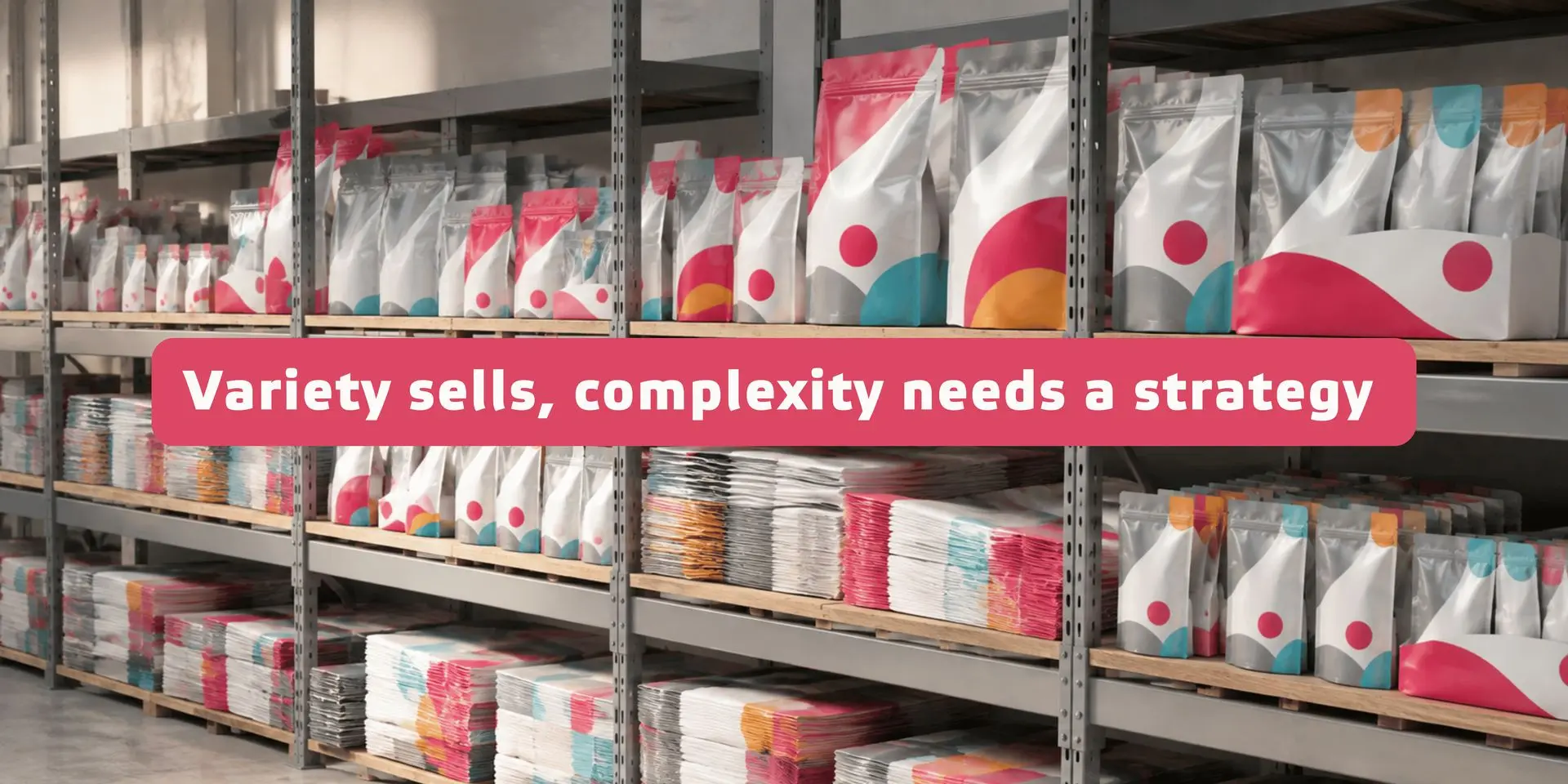
Offering multiple sizes does not mean creating a completely different design every time. In fact, one of the most valuable opportunities is creating a packaging family.
The result is a portfolio that offers variety while remaining immediately recognizable. This balance becomes particularly useful as brands introduce more SKUs. Different presentation. Same brand DNA.
Flexibility is becoming part of risk management
Packaging and processing companies are also navigating operational complexity, lifecycle planning, and the need for more resilient systems. PMMI's 2026 From Complexity to Capability report highlights packaging-line flexibility, changeover impacts, and obsolescence planning as areas companies are evaluating to improve productivity and resilience.
At the same time, packaging regulation in the U.S. is becoming increasingly important at the state level. The requirements and implementation timelines differ by jurisdiction, but the broader lesson for brands is straightforward. This is why production flexibility also has financial value. It gives brands more opportunities to make the next decision using up-to-date information rather than locking too many future decisions into today's forecast.
The goal is more choice, not more complexity
Consumers are asking brands for more choice: different sizes, flavors, price points, functions, and experiences. The challenge is not simply creating more packaging. It's creating more options without adding complexity to your business.
Digital printing enables faster changes and supports multiple designs. Faster replenishment can reduce the pressure to forecast too far ahead. Custom manufacturing can help formats and structures respond to the actual product rather than forcing every product into the same solution.
Together, those capabilities allow packaging production to follow the market more closely. And in a market where shoppers, channels, competitors, and regulations continue to evolve, that may be one of the most valuable capabilities a brand can have.
One size no longer fits all: Rethinking your packaging strategy