
Brands increasingly compete through quality, convenience, innovation, and presentation, making packaging a key part of how shoppers perceive value. The opportunity is clear: brands are no longer expected to be simply “good enough.” They need to stand out and become products shoppers actively choose.
Packaging is a quality signal
Good packaging should make every detail feel intentional. For flexible packaging, quality is communicated through a combination of elements:
Format: the package should make sense for how the product is displayed, stored, transported, and consumed.
Structure: materials and barrier properties should match the product's actual needs.
Print quality: sharp images, consistent colors, and strong definition reinforce credibility.
Finishes: matte, gloss, metallic, transparent, or kraft-style effects can support different positioning strategies.
Features: zippers, windows, valves, and easy-open notches can improve usability when they solve a real consumer need.
These decisions should work together. A package that looks premium but performs poorly creates a disconnect between brand promise and product experience.
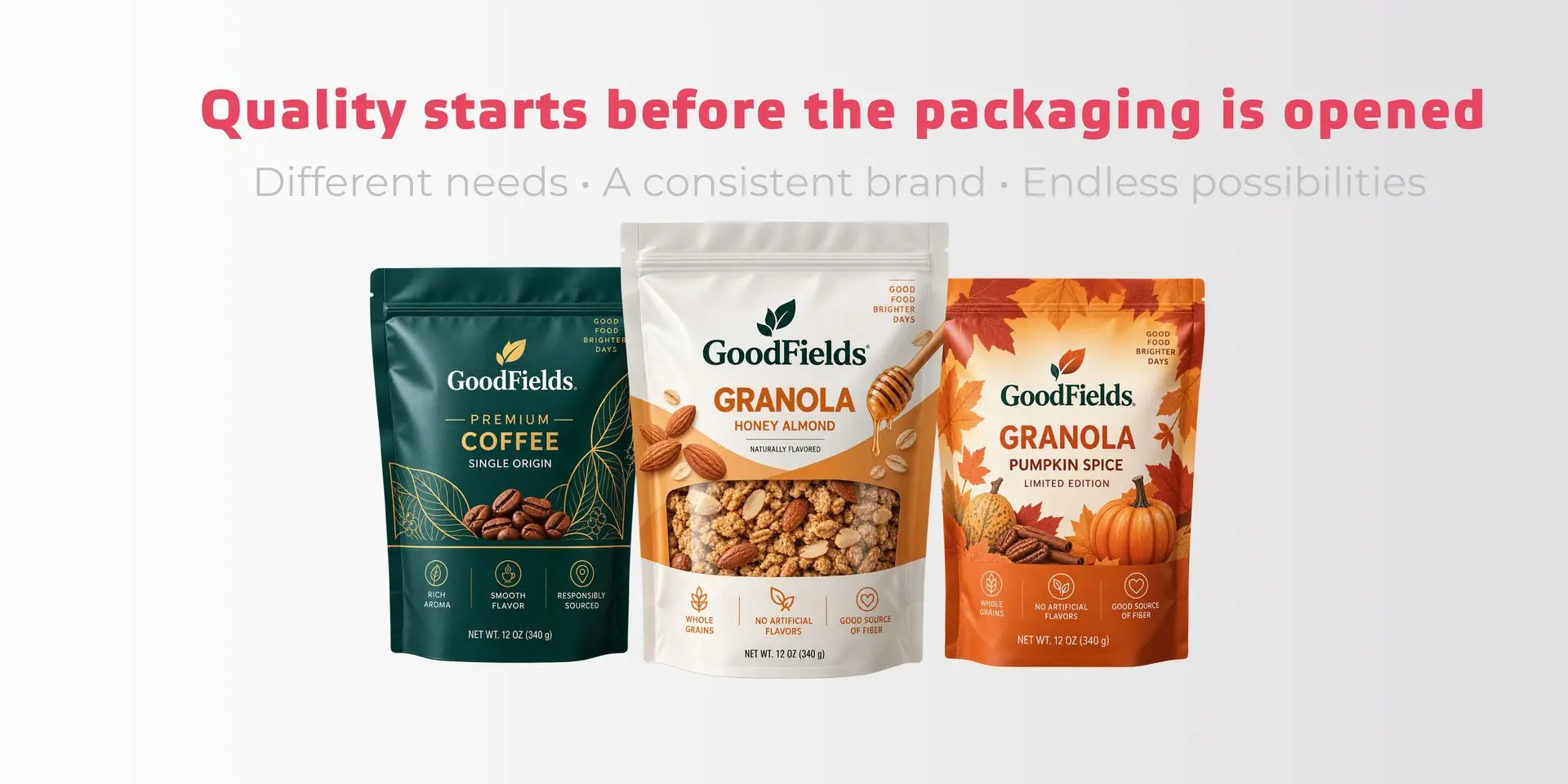
The package should fit the product
Different products require different packaging solutions. Coffee, granola, supplements, pet treats, powders, and freeze-dried products face different risks and consumer expectations. Before selecting a package, brands should consider:
- Sensitivity to oxygen, moisture, or light
- Filling process
- Storage conditions
- Shelf-life requirements
- Portion size
- Frequency of use
- Resealability
- Display conditions
The objective is not simply to choose a pouch that looks attractive. It is to select a structure, size, and set of features that support both product protection and market positioning. This is especially relevant for private labels, where a weak packaging experience can quickly affect the perception of the entire product line.
Brands need clear differentiation
Retailers increasingly manage multiple tiers and product families: value, standard, natural, premium, and seasonal. Packaging helps make those differences visible without sacrificing brand consistency.
- A premium coffee line, for example, may benefit from a matte finish, metallic accents, and a degassing valve.
- A family-size snack may prioritize resealability and convenience.
- A seasonal product may use temporary graphics while keeping recognizable brand elements.
- The goal is not to make every SKU look unrelated.
It is to create enough differentiation that shoppers can easily understand the product while still recognizing the broader brand. Consistent logo placement, typography, hierarchy, color systems, and naming conventions can help create that balance.
Younger shoppers are raising expectations
For these consumers, the package may appear in several environments before it ever reaches the shelf: social media, e-commerce, influencer content, digital ads, and product photography. That means packaging must perform in both physical and digital environments.
Strong visual clarity, recognizable branding, and consistent print quality matter more when a product has only a few seconds to capture attention on a screen.
Growth requires packaging flexibility
As brand portfolios grow, retailers often add new flavors, sizes, seasonal editions, or channel-specific presentations. That creates opportunity, but also operational complexity. Each new version can mean different artwork, specifications, packaging inventory, and production planning.
Digital printing helps brands manage multiple designs, artwork changes, and shorter runs with more flexibility than some conventional printing processes. This can be especially useful for:
- Seasonal launches
- Regional versions
- Limited editions
- Multiple flavors
- Different sizes
- Retailer-specific presentations
The advantage is not simply producing more variants. It is having the flexibility to test, adjust, and expand the products that actually perform.
Quality is becoming part of brand preference
One of the most important shifts in the market is that consumers increasingly expect more from the products they choose. Quality, functionality, convenience, and presentation all contribute to how a product is perceived and whether shoppers choose it again.
For brands, this means competing on more than price. The opportunity is to create products that feel reliable, differentiated, and worth choosing, building preference and encouraging repeat purchases.
Packaging plays an important role in this experience because it brings together protection, functionality, presentation, and brand perception. The right packaging can help communicate quality and reinforce the value consumers associate with a product.
Packaging should reinforce the quality inside
The next step is making sure the packaging supports that progress. At Extrupac, we manufacture custom flexible packaging and adapt your existing brand artwork to the format, dimensions, finishes, and features your product requires.
From standard product lines to premium and seasonal presentations, we help brands develop packaging solutions that support both product performance and market positioning.
Product Packaging: How Quality Wins Shoppers